
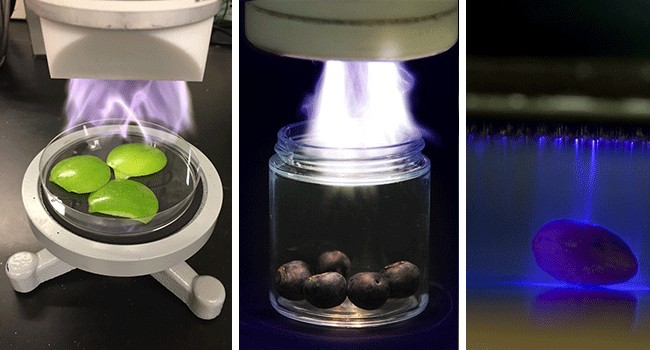
In the researchers' trials, the technology was tested against Salmonella and some viruses in leafy vegetables used in salads, in fruits such as Escherichia coli and Listeria, oranges and blueberries. The cold plasma is formed as a result of ionization by giving sufficient energy to gases such as oxygen or nitrogen, and is an energized gas that can eliminate or neutralize other microorganisms with bacteria.
The prominent aspect of the technology is its ability to process heat-sensitive products without exposing them to high temperatures, unlike thermal plasma. This feature is important in terms of maintaining the appearance, texture and quality of fruits and vegetables during the process. Brendan A. Niemira, director of the Institute of Food Technologists, said that when applied to washing water, cold plasma can be as effective as traditional chlorine-based processes.
However, the level of pathogen reduction depends on the application conditions. When intensity and exposure time are increased, the results are reported to improve. Researchers are also evaluating processing speed, product characteristics, and plant space as they try to develop equipment that produces enough plasma to meet large production volumes. Engineering and calibration work needs to be advanced for full application in the food industry.