
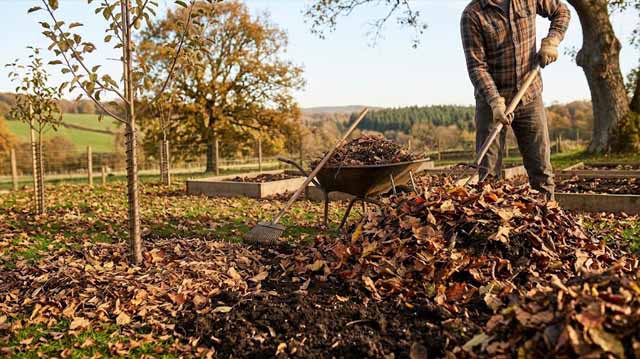
To protect plants that will remain exposed during winter, only dry leaves should be loosely laid out and the cover should be prepared after stable colds have begun. This method reduces the risk of plants overheating and rotting. If the leaves are to be used as mulch, they should first be shredded using a lawn mower or garden shredder. The shredded mulch is less compact, spreads more evenly into the soil, and limits temperature fluctuations and weed emergence.
A warm bed can be prepared in the fall for growing early lettuce, cabbage or kale. A pit about one spade-deep is filled with layers of leaves, fertiliser, mature compost and fertile soil; the decomposition of organic materials helps the soil warm up more quickly in spring. Leaves for leaf humus are collected in a separate pile or compost container and regularly moistened. Its formation usually lasts a year or longer; the resulting humus improves the soil's structure, water retention capacity and organic matter content.